


 31 / 121

©Juan Carlos Vindas/Moment Open/Getty Images
Some insects also prey on other insects. Lady-
bugs and praying mantises are two examples of
insects that are predators. Insect predators,
such as these two, also are called beneficial
insects because they can be used to kill harmful
insects. For example, organic gardeners use
beneficial insects for insect control. Instead of
using insecticides, organic gardeners rely on
beneficial insects to control unwanted insect
populations.
Animals are not the only organisms that are
predators. The Venus flytrap, a plant native to
some regions of North and South Carolina, has
modified leaves that form small traps for insects
and other small animals. The plant emits a
sweet, sticky substance that attracts insects.
When the insect lands on the leaf, the leaf trap
snaps shut. Then, the plant secretes a substance
that digests the insect over several days.
Symbiotic relationships
Some species survive because of relationships
they have developed with other species. The
close relationship that exists when two or more
species live together is
symbiosis
(sihm bee OH
sus). There are three different kinds of symbiosis:
mutualism, commensalism, and parasitism.
Mutualism
The relationship between two or
more organisms that live closely together and
benefit from each other is
mutualism
(MYEW
chuh wuh lih zum).
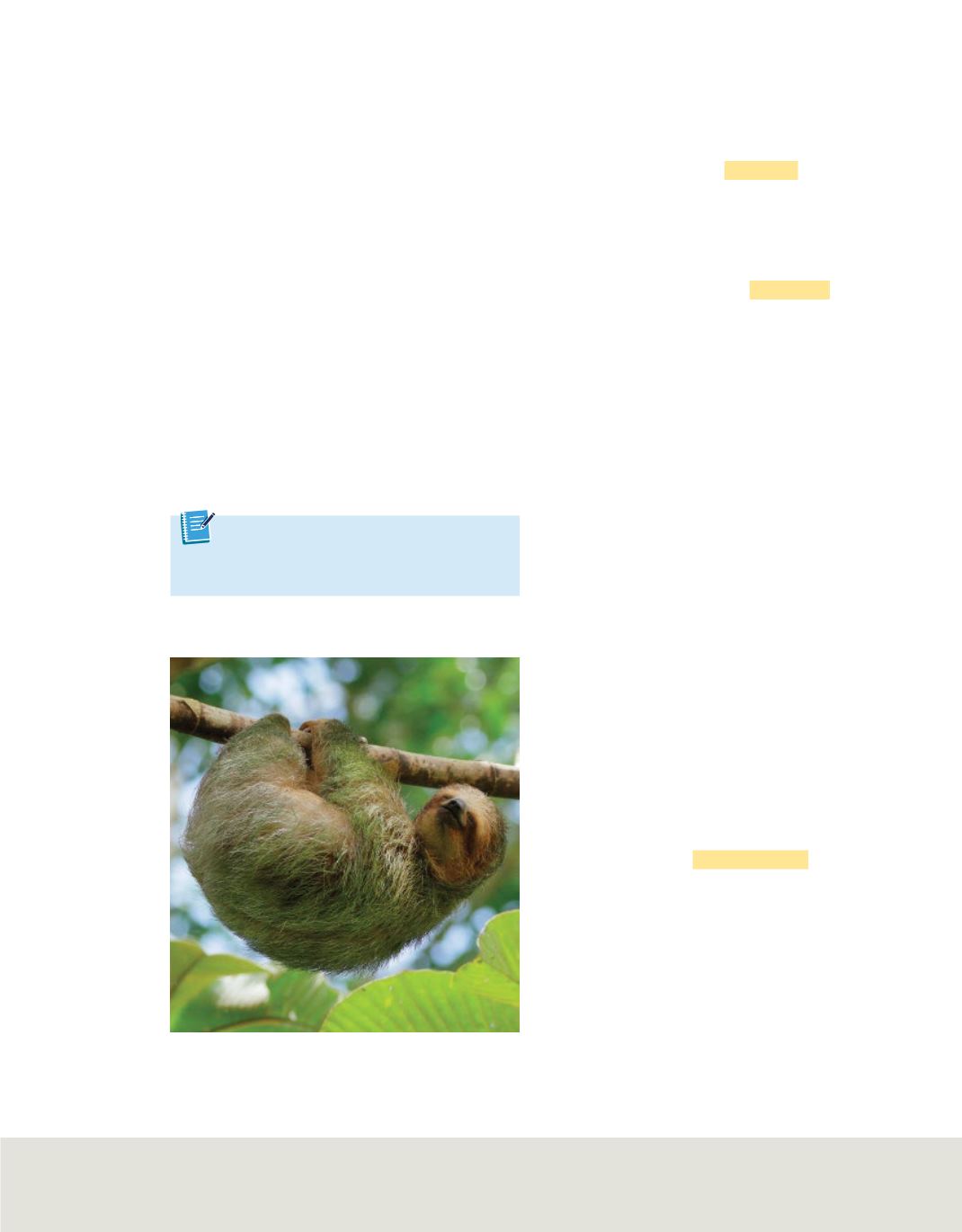
Figure 10
displays an
example of a mutualistic relationship between
a mammal and an algae. A specific kind of
algae grows and takes shelter in the sloth’s fur.
The sloth’s fur also absorbs water easily,
providing the algae with the moisture it needs
to survive. In return, the sloth receives
additional camouflage from the green-colored
algae, and it may also absorb some nutrients
produced by the algae through its skin.
Another example of a mutualistic relationship
is found in lichens. Lichens are formed by a
mutualistic relationship between fungi and
algae. The algae provide food for the fungi, and
the fungi provide a habitat for the algae. The
close association of these two organisms
provides two basic needs for the organisms—
food and shelter.
Commensalism
Have you ever seen lichens
growing on a tree? The lichens benefit from
their relationship to the tree by gaining more
exposure to sunlight. The tree is not harmed by
the lichen, but it does not receive any benefit
from the lichen either. This type of relationship
is commensalism.
Commensalism
(kuh MEN
suh lih zum) is a relationship in which one
organism benefits and the other organism is
neither helped nor harmed.
The relationship between the clownfish and the
sea anemone in which it lives is likely commen-
sal. The clownfish finds food and protection by
living in the sea anemone. While the sea
anemone is not harmed, it does not receive any
apparent benefit from the relationship with the
clownfish.
Figure 10
Algae live in this sloth’s fur as part of a
symbiotic relationship.
Explain
why this is an example of a mutualistic
relationship.
Get It?
Describe
one example each of competition
and predation.
Lesson 1 • Organisms and Their Relationships
33