


 99 / 121

(l) vainillaychile/Shutterstock.com; (r) smereka/Shutterstock.com
The Importance of Biodiversity
Sustaining biodiversity so that ecosystem functioning and productivity are maintained is essential
to supporting and enhancing life on Earth. Humans depend on the living world for resources
and other benefits provided by diversity. There are economic, aesthetic, and scientific reasons
for preserving biodiversity.
Direct economic value
Maintaining biodiversity has a direct economic value to humans. Humans depend on plants and
animals to provide food, clothing, energy, medicine, and shelter. Preserving species that are used
directly is important, but it also is important to preserve the genetic diversity in species that are
not used directly. Those species serve as possible sources of desirable genes that might be needed
in the future.
The reason there might be a future need for desirable genes is that most of the world’s food crops
come from just a few species. These plants have relatively little genetic diversity and share the same
problems that all species share when genetic diversity is limited, such as lacking resistance to disease. In
many cases, close relatives of crop species still grow wild in their native habitat. These wild species
serve as reservoirs of desirable genetic traits that might be needed to improve domestic crop species.
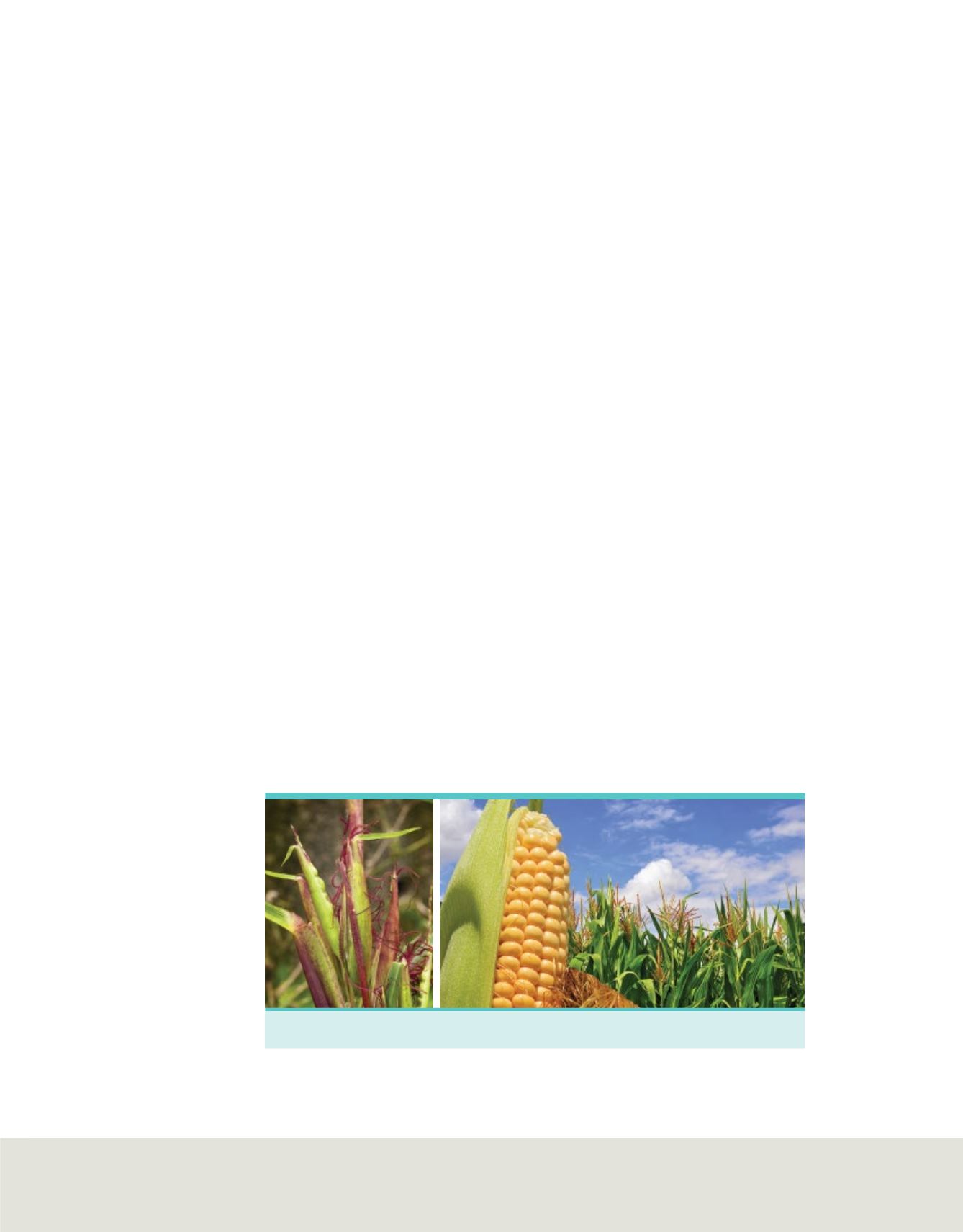
The distant relative of corn, teosinte, shown in
Figure 5
, is resistant to the viral diseases that damage
commercial corn crops. Using this wild species, plant pathologists developed disease-resistant corn
varieties. If this wild species had not been available, this genetic diversity would have been lost, and
the ability to develop disease-resistant corn varieties would also have been lost.
In addition, biologists are able to transfer genes that control inherited characteristics from one
species to the other. This process is sometimes referred to as genetic engineering. Crops have
been produced that are resistant to some insects, that have increased nutritional value, and that
are more resistant to spoilage. Most wild species of plants and animals have not been evaluated
for useful genetic traits. The opportunity to benefit from these genes is lost forever if wild
species of plants and animals become extinct. This increases the importance of species that
currently have no perceived economic value because their economic value might increase in the
future.
Figure 5
The teosinte plant contains genes that are resistant to viral
diseases that affect corn plants. These genes have been used to
produce virus-resistant commercial corn varieties.
Teosinte plant
Commercial corn plant
Lesson 1 • Biodiversity
101