



 98 / 121

0 – 50
Number of
species
50 – 100
100 – 150
200 – 250
250 – 300
300 – 350
350 – 400
400 – 450
450 – 500
500 – 550
550 – 600
600 – 650
650 – 700
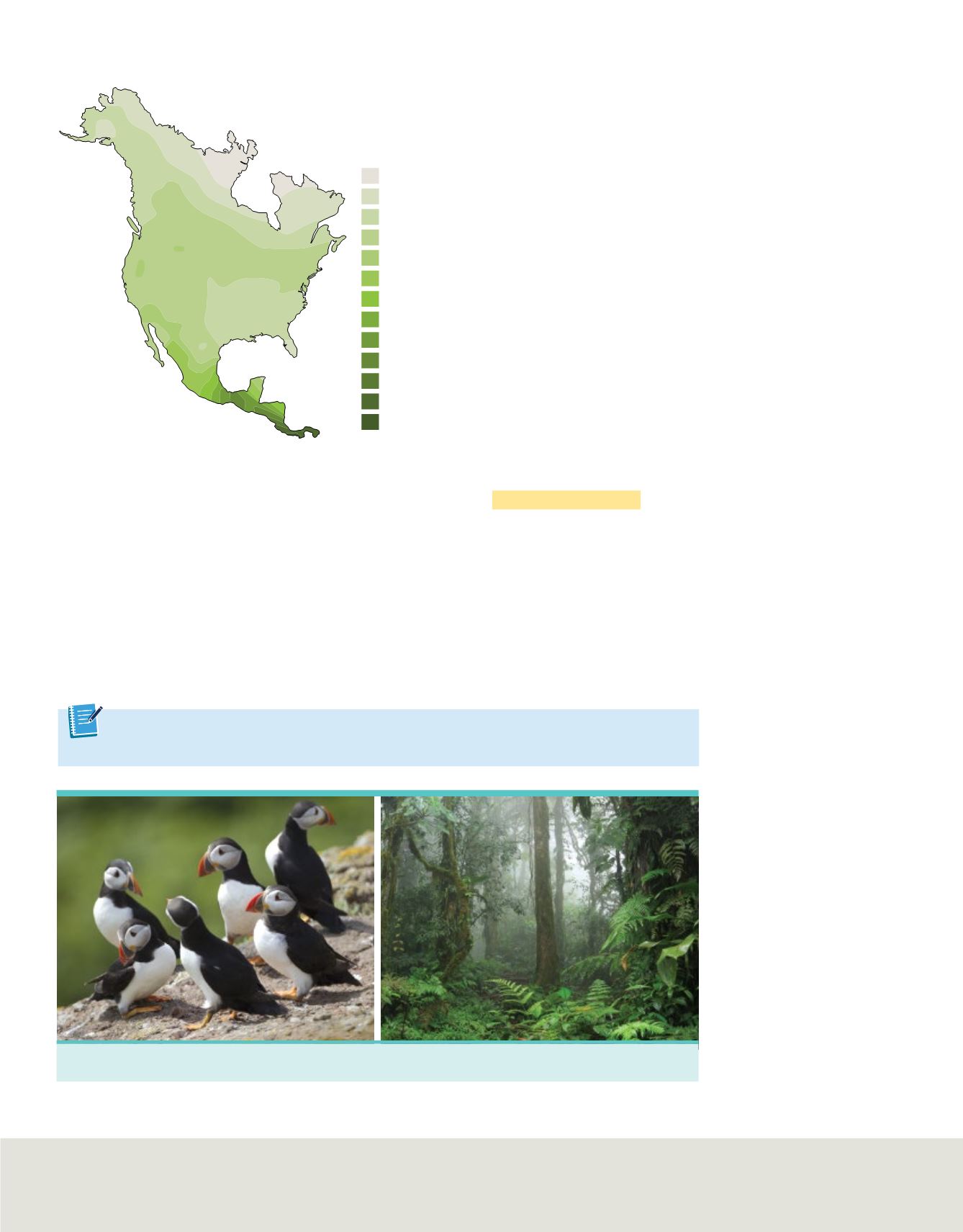
Distribution of Bird Species
(l) Richard McManus/Moment Open/Getty Images; (r) TravelStrategy/Shutterstock.com
Ecosystem diversity
The variety of ecosystems present in the biosphere is called
ecosystem diversity.
An
ecosystem is made up of interacting populations and the abiotic factors that support
them. The interactions of organisms affect the development of stable ecosystems.
Different locations around the world have different abiotic factors that support different
types of life. For example, an ecosystem in Alaska has a set of abiotic factors that
supports puffins, which are shown in
Figure 4
. An ecosystem in South America has a
different set of abiotic factors that supports the tropical plant life shown in
Figure 4
.
Like these ecosystems, most of the ecosystems on Earth support a diverse collection of
organisms.
Get It?
Explain
why the health of a species is closely tied to the health of the habitat.
Figure 3
This map shows the distribution of bird
species in North and Central America. As you move
toward the tropics, biodiversity increases.
Estimate
the number of bird species where you live.
Figure 4
Ecosystems with diverse abiotic factors support a variety
of organisms.
Puffins in the Arctic
Rainforest in South America
100
Module 5 • Biodiversity and Conservation