


 97 / 121

Peter ten Broecke/E+/Getty Images
The variety of colors in the beetles demonstrates a form of genetic diversity. The beetles
have other characteristics that differ, but they are not as apparent as their color. These
characteristics might include resistance to a particular disease, the ability to recover
from a disease, or the ability to obtain nutrients from a new food source should the old
food source disappear. The beetles with these characteristics are more likely to survive
and reproduce than beetles without these characteristics. Genetic diversity within
interbreeding populations increases the chances that some individuals will survive
during changing environmental conditions or during an outbreak of disease.
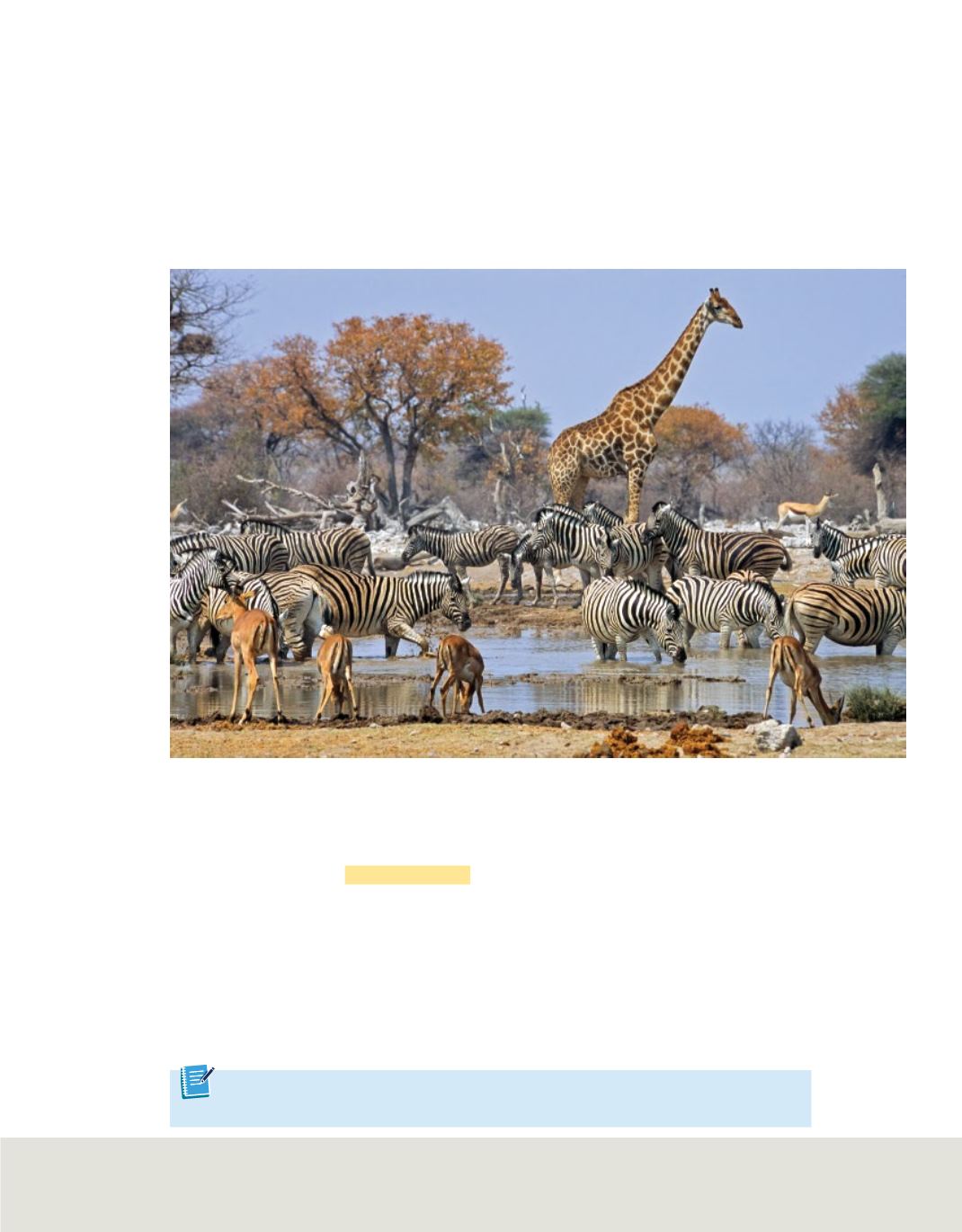
Species diversity
The number of different species and the relative abundance of each species in a biologi-
cal community is called
species diversity.
As you look at
Figure 2
, notice how many
different species of organisms are in this one area. This habitat represents an area with
a high level of species diversity because there are many species present in one location.
Species diversity, however, is not evenly distributed over the biosphere. As you move
geographically from the polar regions to the equator, species diversity increases. For
example,
Figure 3
on the next page shows the number of bird species from Alaska to
Central America. Use the color key to see how diversity changes as you move toward
the equator.
Figure 2
Many species gather at this watering hole, making it a habitat rich in species diversity.
Get It?
Compare and contrast
genetic and species diversity.
Lesson 1 • Biodiversity
99