



 96 / 121

Antoon Loams/EyeEm/Getty Images
What is Biodiversity?
The loss of an entire species in a food web is not an imaginary situation. Entire species
permanently disappear from the biosphere when the last member of the species dies in
a process called
extinction.
As species become extinct, the variety of species in the
biosphere decreases, which decreases the health of the biosphere.
Biodiversity
is the
variety of life in an area that is determined by the number of different species in that
area. It is increased by the formation of new species and decreased by the loss of species
(extinction). Biodiversity increases the stability of an ecosystem and contributes to the
health of the biosphere. There are three types of biodiversity to consider: genetic
diversity, species diversity, and ecosystem diversity.
Genetic diversity
The variety of genes or inheritable characteristics that are present in a population
comprises its
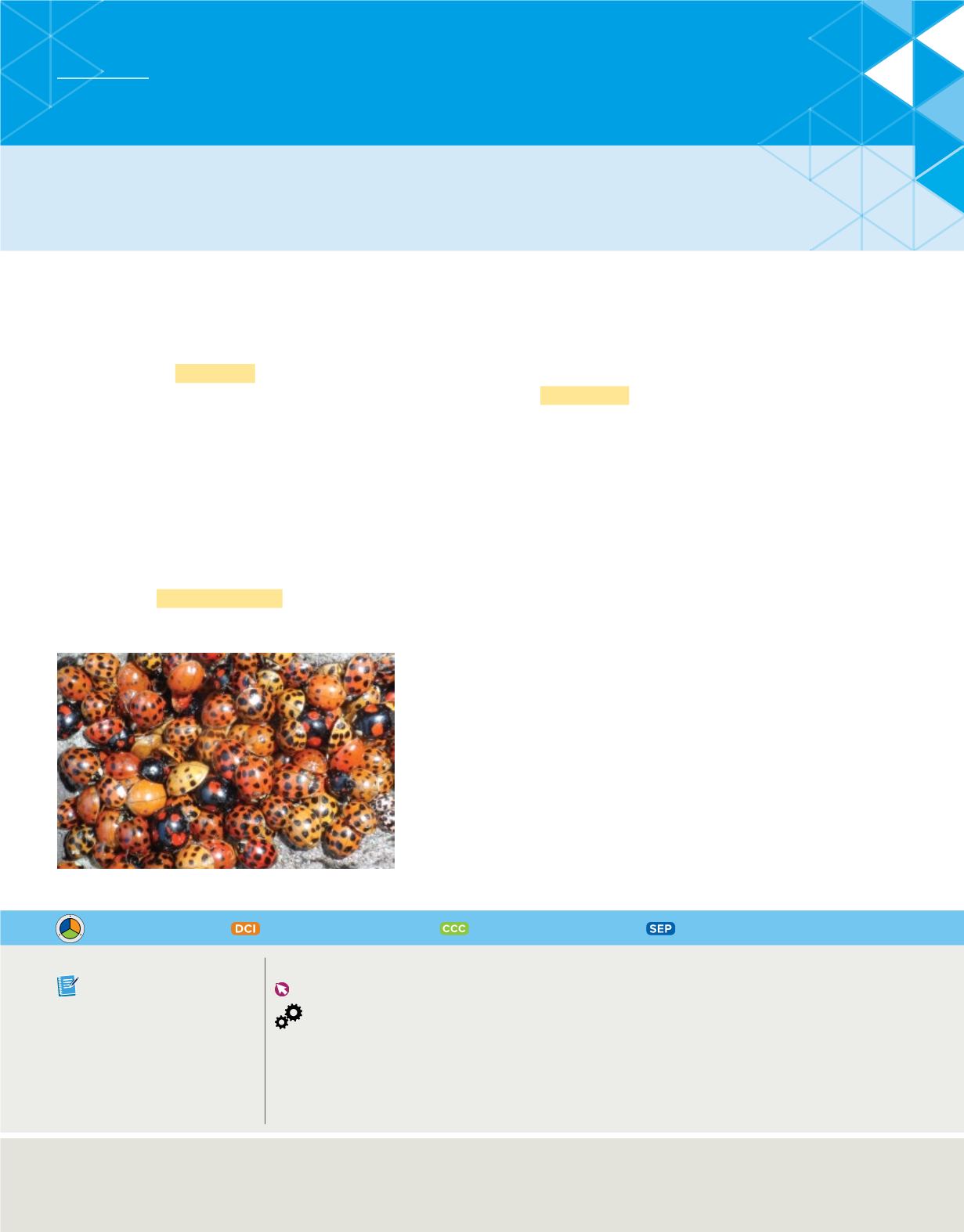
genetic diversity. Figure 1
shows characteristics that are shared by Asian
ladybird beetles, such as general body structure.
Figure 1
These Asian ladybird beetles,
Harmonia axyridis
,
demonstrate some visible genetic diversity because of their
different colors.
Suggest
some other characteristics that might vary among the
beetles.
FOCUS QUESTION
Why is biodiversity important?
LESSON 1
BIODIVERSITY
Disciplinary Core Ideas
Crosscutting Concepts
Science & Engineering Practices
3D THINKING
C
C
C
S
E
P
D
C
I
COLLECT EVIDENCE
Use your Science Journal to
record the evidence you collect as
you complete the readings and
activities in this lesson.
INVESTIGATE
GO ONLINE
to find these activities and more resources.
Applying Practices:
Biodiversity in Leaf Litter
HS-LS2-2.
Use mathematical representations to support and revise explanations based on
evidence about
factors affecting biodiversity and populations in ecosystems of
different
scales.
98
Module 5 • Biodiversity and Conservation