


 119 / 121

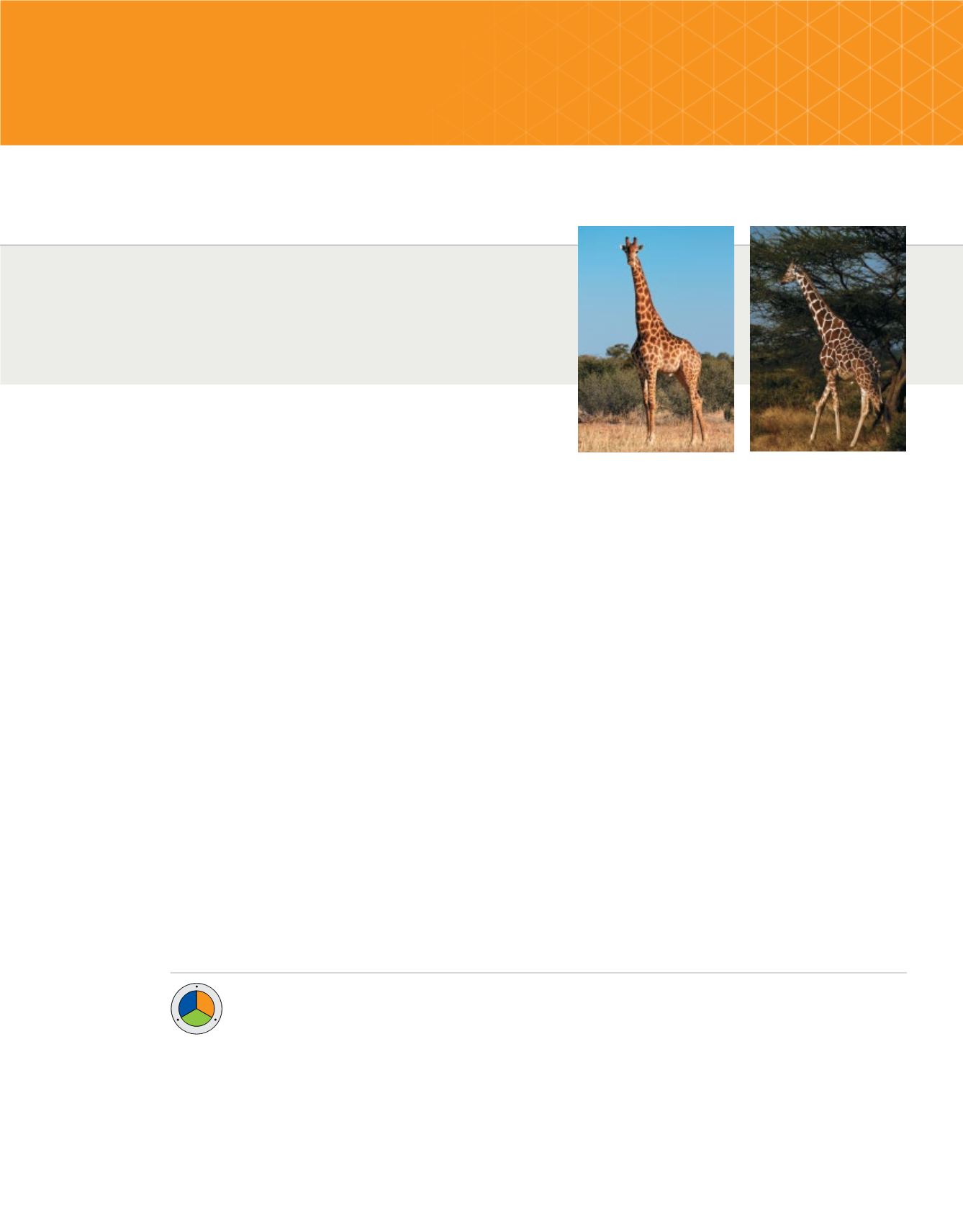
(l) NSP-RF/Alamy Stock Photo; (r) Carl & Ann Purcell/Corbis Documentary/Getty Images
COMMUNICATE SCIENTIFIC IDEAS
Create a poster that shows why
conservationists are concerned about the
population numbers of northern and reticulated
giraffes. How would losing one of these types
of giraffes affect biodiversity in Africa?
C
C
C
S
E
P
D
C
I
More Species—
Fewer Individuals
Reclassification
Scientists have long thought all giraffes
belonged to one species that could be
divided into nine subspecies. However, new
evidence has led scientists to reconsider this
classification. Analysis of DNA from 190 wild
giraffes indicates that there are four genetically
distinct giraffe groups.
With the discovery of these genetically
isolated groups, some scientists think giraffes
should be categorized into four species: the
northern giraffe, the southern giraffe, the
reticulated giraffe, and the Masai giraffe.
However, because these four groups are
not reproductively isolated—interbreeding
between these groups is considered rare but
possible—some scientists still think all giraffes
belong to only one species.
The genetic findings have brought new
attention to conservation efforts. The total
number of wild giraffes has dropped from
about 150,000 to less than 90,000 in the
past 30 years, but giraffes have not been
considered a species of great concern
because their numbers are still large
compared to other species. With the discovery
of four genetically distinct groups, concern
has increased because the population
numbers of some of the groups are low.
For example, there are less than 5,000 northern
giraffes left in Africa, making them one of the
most endangered large mammals in the world.
Giraffe populations are dropping due to loss
of habitat, civil unrest, livestock overgrazing,
and hunting. Conservationists are working to
protect remaining populations. For example,
conservationists are working with the San
Diego Zoo Institute for Conservation Research
to sequence the giraffe genome.
Giraffes are found in grasslands throughout
Africa. These animals—the tallest in the
world—eat leaves, seeds, and fruits. They
need to consume hundreds of pounds of
food per week to survive.
SCIENTIFIC BREAKTHROUGHS
Scientists have determined that there are four genetically
distinct giraffe groups, including the Masai giraffe (left) and
the reticulated giraffe (right).
Module 5 • Scientific Breakthroughs
121