



 117 / 121

10
-3
10
-2
10
-1
1
10 100 1000 10
4
1
10
100
1000
10
4
Size of a ected area (km
2
)
(log scale)
Recovery time (y)
Recovery Time for Disasters
Human-caused or natural disasters
Natural disasters
Human-caused disasters
Forest
fire
Flood
Salination
Groundwater
exploitation
Urbanization
Industrial
pollution
Modern
agriculture
Acid
rain
Nuclear
bomb
Oil spill
Slash
and burn
Tree
fall
Lightning
strike
Meteor
strike
Tsunami
Landslide
Environmental Images/Universal Images Group/age fotostock
Given time, biological communities can recover
from natural and human-made disasters, as
illustrated in
Figure 21
. The size of the area
affected and the type of disturbance are
determining factors for recovery time. The length
of time for recovery is not related directly to
whether the disaster is natural or human-made.
In general, the larger the affected area, the
longer it takes to recover.
Bioremediation
The use of living organisms, such as prokaryotes,
fungi, or plants, to detoxify a polluted area is
called
bioremediation.
In 1975, a leak from a
fuel-storage facility in South Carolina released
about 80,000 gallons of kerosene-based jet fuel.
The fuel soaked into the sandy soil and
contaminated the underground water table.
Microorganisms that naturally are found in the
soil were able to break down these carbon-based
fuels into carbon dioxide.
Scientists found that by adding additional nutrients to the soil, the rate at which the
microorganisms decontaminated the area increased. In a few years, the contamination
in the area was greatly reduced. These microorganisms can be used in other ecosystems
to remove toxins from soils that are
contaminated by accidental oil or fuel spills.
Some species of plants are being used to
remove toxic substances, such as zinc, lead,
nickel, and organic chemicals, from damaged
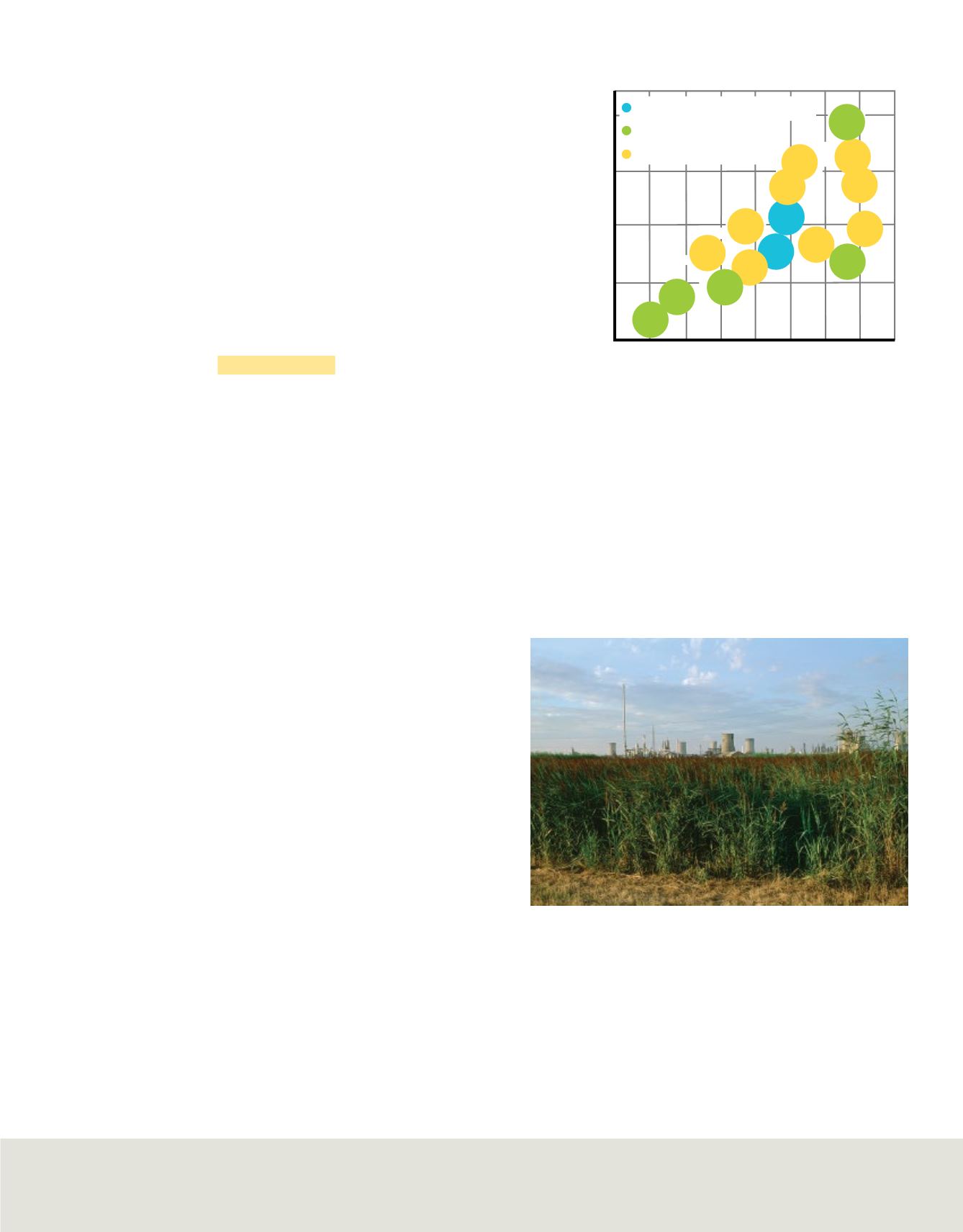
soils, as shown in
Figure 22
. These plants are
planted in contaminated soils, where they
store the toxic metals in their tissues. The
plants then are harvested, and the toxic metals
are removed from the ecosystem.
Even animal structures hold some promise in
the field of bioremediation. Some studies
suggest that applying fish bones to the soil
might help to transform lead, which is harmful
to humans, into another harmless substance.
Although bioremediation is relatively new,
there appears to be great promise in using
organisms to detoxify some ecosystems that
have been damaged.
Figure 21
The recovery time for disasters is dependent
upon the size of the area affected and on the type of
disturbance.
Determine
the approximate recovery time for a landslide.
Figure 22
Chemical waste from an industrial complex is
being treated using reed beds. Bacteria and fungi in the
reed beds transform a wide range of pollutants into
harmless substances.
Lesson 3 • Conserving Biodiversity
119