



 90 / 121

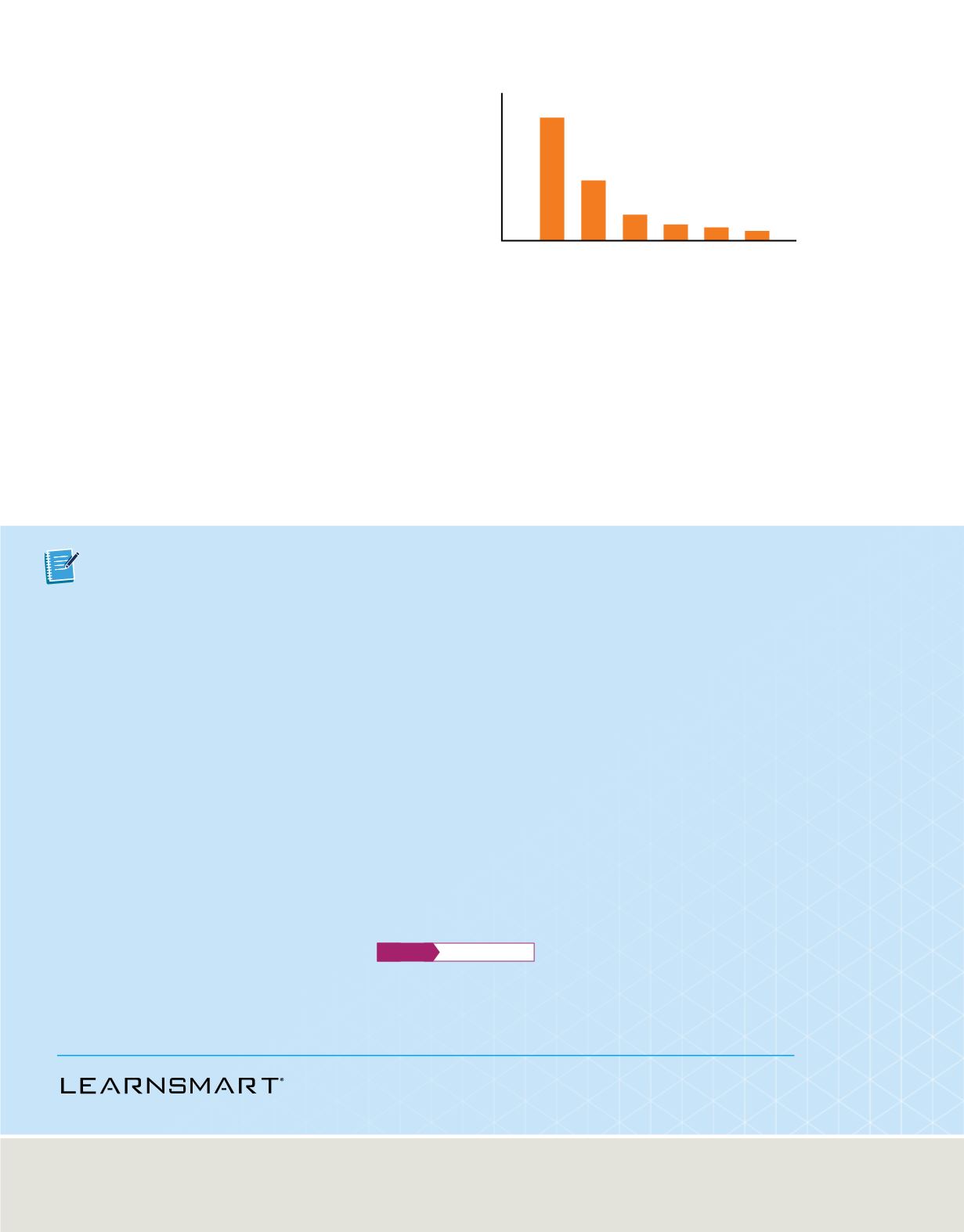
14
12
10
8
6
4
2
0
USA
Germany
Brazil
Indonesia
Nigeria
India
Estimated hectares of land used
Country
Human Use of Resources
Go online to follow your personalized learning path to review, practice,
and reinforce your understanding.
Summary
• Human population growth rates
vary in industrially developing
countries and industrialized
countries.
• Zero population growth occurs
when the birthrate and immi-
gration rate of a population
equals the death rate and the
emigration rate.
• The age structure of the human
population is a contributing
factor to population growth in
some countries.
• Earth has an undefined carry-
ing capacity for the human
population.
Demonstrate Understanding
1.
Describe
the change in human population growth
over time.
2.
Describe
the differences between the age structure
graphs of nongrowing, slowly growing, and rapidly
growing countries.
3.
Assess
the consequences of exponential population
growth of any population.
4.
Summarize
why the human population began to grow
exponentially in the Modern Age.
Explain Your Thinking
5.
Analyze
how a newly emerging disease might affect
the population size in an industrially developing and in
an already developed country.
6.
Connection
MATH
Construct an age-structure
diagram using the following percentages: 0–19 years:
44.7; 20–44 years: 52.9; 45 years and over: 2.4. Which
type of growth is this country experiencing?
Check Your Progress
Figure 15
The amount of resources used per person
varies around the world.
Another important factor in keeping the human
population at or below the carrying capacity is
the amount of resources from the biosphere that
are used by each person. Currently, individuals
in industrially developed countries use far more
resources than those individuals in developingv
countries, as shown in
Figure 15
. This graph
shows the estimated amount of land required to
support a person through his or her life,
including land used for production of food,
forest products and housing, and the additional
forest land required to absorb the carbon
dioxide produced by the burning of fossil
fuels. Countries such as India are becoming
more industrialized, and they have a high
growth rate. These countries are adding more
people and are increasing their use of resources. At some point, the land needed to sustain each
person on Earth might exceed the amount of land that is available. At that time the human
population will likely have exceeded Earth’s carrying capacity.
92
Module 4 • Population Ecology