Emerge McGraw Hill Literacy logo

Emerge! Author Spotlight:
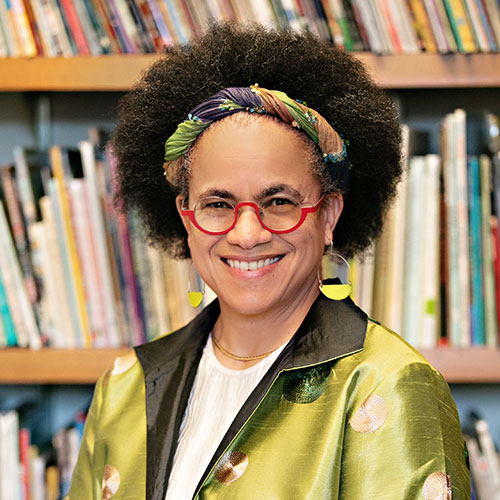
Dr. Tanya S. Wright

On knowledge building, text sets, and why learning new words and learning new things always go hand in hand

We believe the people behind a program matter as much as the program itself. That's why we're launching a series of introductions to the researchers, educators, and children's literature experts whose expertise, passion, and lived experience shaped every page of Emerge!.

Next in our Emerge! author spotlight series is Dr. Tanya S. Wright, Professor in the Marsal Family School of Education at the University of Michigan, where she studies early literacy instruction with a focus on vocabulary, knowledge building, and disciplinary literacy in the elementary grades. A former kindergarten teacher whose classroom experience has never left her research, Dr. Wright brings to Emerge! decades of work on what conditions are required for children to build the kind of knowledge and language that makes reading comprehension possible. Her research on text sets, vocabulary development, and knowledge building is embedded in the architecture of every Emerge! unit. We sat down with her to talk about what kindergartners taught her that no research study could, why "learn to read, then read to learn" gets the science wrong, and why every new thing we learn comes with new words attached.

You started your career as a kindergarten teacher before becoming a researcher. What did you learn working with young children that you couldn't have learned anywhere else, and how does it shape the way you think about knowledge building now?

So the most important thing that I learned as a kindergarten teacher, and that is reinforced every time I work with young children, is that young children are eager and excited to learn. When I would ask kindergarteners and when I still ask them at the beginning of the year what they want to learn in kindergarten, the most common response is, I want to learn to read. And that can sometimes look like, want to learn to read, you know, this particular book that my big brother or sister can read or something like that. And to be honest, the second most common response is I wanna learn to tie my shoes. So young children are excited to learn. Right? They ask brilliant and surprising questions. They like to have fun. And I think our jobs as educators is to facilitate that learning, including making sure that they learn to read because that's what they wanna learn and, helping them to build knowledge about their worlds.

The most important thing that I learned as a kindergarten teacher, and that is reinforced every time I work with young children, is that young children are eager and excited to learn.

When I would ask kindergartners what they want to learn in kindergarten, the most common response is, I want to learn to read. That can sometimes look like, I want to learn to read this particular book that my big brother or sister can read. The second most common response is, I want to learn to tie my shoes. Young children are excited to learn. They ask brilliant and surprising questions. They want to figure things out about the world. They like to have fun.

And I think our job as educators is to facilitate that learning. This includes making sure that they learn to read, because that's what they want to learn, and helping them to build knowledge about their worlds.

You've written that knowledge supports reading comprehension, and reading comprehension supports knowledge development. How should that bidirectional relationship impact how we design literacy instruction, especially in the early grades?

This isn’t really a new idea — there's substantive research on this reciprocal relationship.

But what does it mean? It means that the more related knowledge we have to the topic or ideas in a text, the better we understand that text. At the same time, the better we are at understanding a text, the more we can comprehend and therefore learn from it — which in turn contributes to our knowledge.

Thinking about elementary grades, this suggests that we want to build knowledge, vocabulary, and comprehension skills and strategies together from the start of school. It also means that we shouldn't focus on one before the other.

You've probably heard people say that kids should learn to read and then read to learn. While that phrase sounds catchy, it truly does not make sense based on the research on reading. From the first time we put a young child on our lap and read a picture book with them, we're helping them read to learn — to understand new things and build knowledge. If we really think about what young children need, they need integrated knowledge building, comprehension supports, and vocabulary development from the start of school.

Why is knowledge building important to readers? What are some specific ways it helps?

Some specific ways that we know that knowledge helps readers include helping with making inferences in texts. Texts. So we talk a lot in general about supporting kids to make inferences with texts, but what an inference is, is something the author is telling you and then something you bring from your existing knowledge text to figure out something that's not quite said by the author. Sometimes we call those gap filling inferences. The more we know, the better we are able to engage in the type of gap filling inferences that readers need to make as part of texts. Knowledge is intricately connected with vocabulary, meaning we typically know words associated with a particular body of information. And we know that vocabulary, the more words we know or related words in a text help us to understand. Another way that we think that knowledge facilitates reading comprehension in particular is that when readers have more knowledge, they actually use more sophisticated cognitive processes. So they're more strategic readers. And it's possible that this improved cognitive processing is because readers are better able to think about ideas that they know something about. So they can ask more relevant questions or consider those ideas in the context of something they already know.

First, it helps with making inferences in text. An inference is something the author is telling you, and then something you bring from your existing knowledge to figure out what's not quite said. Sometimes we call these gap-filling inferences. The more we know, the better we are able to engage in the kind of gap-filling that readers need to do.

Knowledge is also intricately connected with vocabulary. We typically know words associated with a particular body of information. The more related words we know in a text, the better we understand it.

There's one more way that knowledge facilitates reading comprehension: when readers have more knowledge, they actually use more sophisticated cognitive processes. They're more strategic readers. It's possible that this improved cognitive processing is because readers are better able to think about ideas they know something about, so they can ask more relevant questions or consider those ideas in the context of something they already know.

You've asked, "What if kids want to read something they know very little about?" Why is it important that students develop comprehension skills and strategies alongside knowledge building? What gets lost when we treat those as competing priorities?

In conversations about reading instruction, people often get focused on the one magical ingredient that, if we just do that thing well, all kids will be strong readers. Recently, one of those has been knowledge-building instruction. Knowledge-building instruction is an incredibly important aspect of reading instruction, but the logic of that argument goes something like: knowledge building is so important and facilitative of reading, so if we just focus on it, kids will be able to comprehend all texts they try to read.

But if we look at the real research — the studies that constitute the science of reading — and we look at research-based models of reading, we see that there is no one magical ingredient. Knowledge is important and helps with comprehension, but one of the primary reasons to read is to learn new things. So building knowledge is one important piece of the puzzle, but we also need to support kids with skills and strategies when they want to read on a totally new topic that they do not have any pre-existing knowledge about.

Your research on text sets consistently shows benefits for knowledge, vocabulary, and comprehension. Can you walk us through why that works, and what it looks like when a teacher puts it into practice?

With my colleague Gina Cervetti and several others, I've had the opportunity to work on three different studies of text sets. In each, we gave students a set of texts on a related topic with key concepts that reoccurred across the texts. We gave other students unrelated texts: one on chocolate, one on birds, one on puppies.

In each case, we compared vocabulary learning, comprehension, and knowledge development. In every case — whether older students reading independently or younger students in read-alouds — we saw benefits for reading a set of interrelated texts.

This makes sense if you just think about your own personal experiences. Maybe at the beginning of a college class, the first few readings made no sense because everything felt so new. But as you continued to read on a topic, you became more familiar with the concepts, the vocabulary, the ideas, and new readings made more sense.

For instruction, we know that reading sets of related texts is going to have benefits for students' comprehension, vocabulary development, and knowledge building. We love to see small changes to instruction — text set versus random texts — that make big differences for kids.

You've said, "We learn new words when we learn new things." What does that mean for how vocabulary instruction should be woven into a knowledge-building program?

Really, anything new that you learn, from sports to hobbies to academic subject areas, has specific words associated with it.

Let's look at some examples. If you decide you want to learn to cook, a recipe might say to season the food, meaning add spices — which is totally different from the everyday meaning of season that indicates spring, summer, or fall. Or a recipe might tell you to score the top of a pie, meaning cut narrow grooves to let the steam out — totally different from scoring a point in a game. You take up cooking, you're learning a new thing, and you learn the new words associated with it.

For younger children doing a unit on graphing in math, they're going to learn words like plot and grid and coordinates.

When we apply this to elementary school instruction, we know that there are going to be sets of words associated with any knowledge building that kids are doing in school. And that's wonderful — but it also means that if we want all students to be able to read, write, speak, listen, and learn about what we're studying, we need to be explicit about pointing out some of these important words and making sure that everyone in the class knows them and can use them to discuss the ideas.

I also love this because it really means that we are lifelong learners and lifelong vocabulary learners. Every time we learn something new, in school or in life, we're going to learn new words associated with that. That's just kind of awesome!

How did your research impact the design of Emerge!?

Some important research in the area I work in has made it into the design of Emerge!. One is the idea that a wonderful way to support knowledge building is through text sets, or sets of related texts with related concepts.

Another is the idea that knowledge development, comprehension skills and strategies, and vocabulary should be taught in integrated ways as students discuss and engage with text sets, rather than thinking of each as separate. The knowledge building, comprehension development, and vocabulary are happening together in the same part of the curriculum.

Finally, there is an important emphasis on the vocabulary associated with knowledge building — making sure students are learning the words that represent key concepts and using them as readers, writers, speakers, and listeners throughout the work of the unit. Alongside that is an emphasis on asking questions and tracking what students are figuring out as they read new texts over the course of the unit. Children are curious and excited and have lots of questions, and it's wonderful to keep track of that learning — and to look at all the new and exciting things they've figured out.

Dr. Tanya S. Wright is a Professor of Early Literacy at the University of Michigan and a nationally recognized researcher in early language, vocabulary, and literacy development. She is the author of multiple books for educators, has published widely in leading education journals, and has received funding from prominent national research organizations.

Top