
The High-Tech Business of Breeding a New Orchid
Breeding companies compete to develop new orchid types with the right color, shape, size, and lifespan.
- Blog
- Article
- Higher Education
- Understanding Business
- Chapter 1 Taking Risks & Making Profits
- Chapter 2 Economics
- Chapter 3 Globalization
- Chapter 6 Entrepreneurship
- Chapter 14 Product & Price
- Chapter 15 Distribution
- Chapter 16 Place & Promotion
- Product Development
- Product Distribution
- Supply & Demand
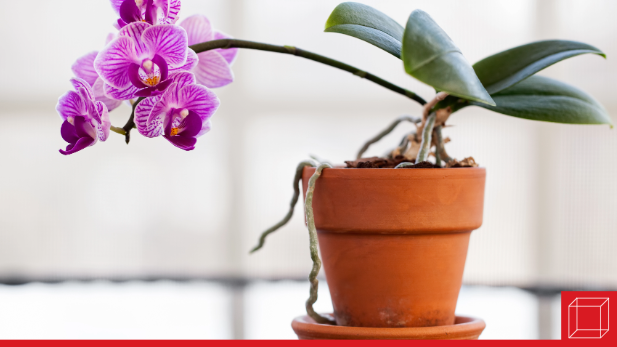
The creation of any new product can take years of development as companies invest tons of time and money into research and testing. In the orchid industry, for instance, a single new variety takes nearly a decade to develop. Breeding companies compete to develop new flowers with the right color, shape, size, lifespan, and resistance to disease that customers expect. But crossing two promising orchids does not guarantee that the new plants will have those qualities. A company may start with thousands of plants and slowly discard most of them as it searches for a variety worth selling. The Dutch orchid breeder Floricultura has more than 180 varieties in its catalog and several hundred more in development at any given time.
Much of the development process in the orchid business is spent waiting for plants to grow. A newly bred orchid can take years to flower, and only then can breeders see some of the qualities they are looking for. Thanks to new technology, though, breeders are making this long process faster and more efficient. Floricultura develops genetic markers that can show whether a young plant is likely to have a certain trait. Researchers can then screen thousands of newly bred orchids and remove some plants before spending years growing them. These techniques are valuable enough that Floricultura keeps parts of its genetic research and cloning process secret from competitors.
But even with genetics, cloning, automation, and years of testing, orchid breeding still involves risk. The plants have to grow before breeders know if they have the traits that customers want, such as large flower size and disease resistance. After years of development, the final decision is surprisingly low-tech: Floricultura’s breeders look at the remaining orchids and decide which ones are beautiful enough to sell. A plant can have every trait researchers wanted and still fail that final test. So while technology can help companies develop promising products faster, it cannot guarantee that consumers will want to buy them.
Questions:
Why do orchid growers like Floricultura invest lots of time and money into growing new varieties of flowers?
Do you think companies in other fields could benefit from investing heavily in research and development like the orchid industry? Why or why not?
Matthew Kenyon, “Inside the Secretive and Lucrative World of Orchid Breeding,” BBC, May 14, 2026.