How ROAR and McGraw Hill Are Connecting K–12 Dyslexia Screening to Student Support

Learn how integrated literacy screening and assessment data can help educators identify reading needs, target interventions, and support student literacy growth.


Tags: Blog, Article, Corporate, PreK-12
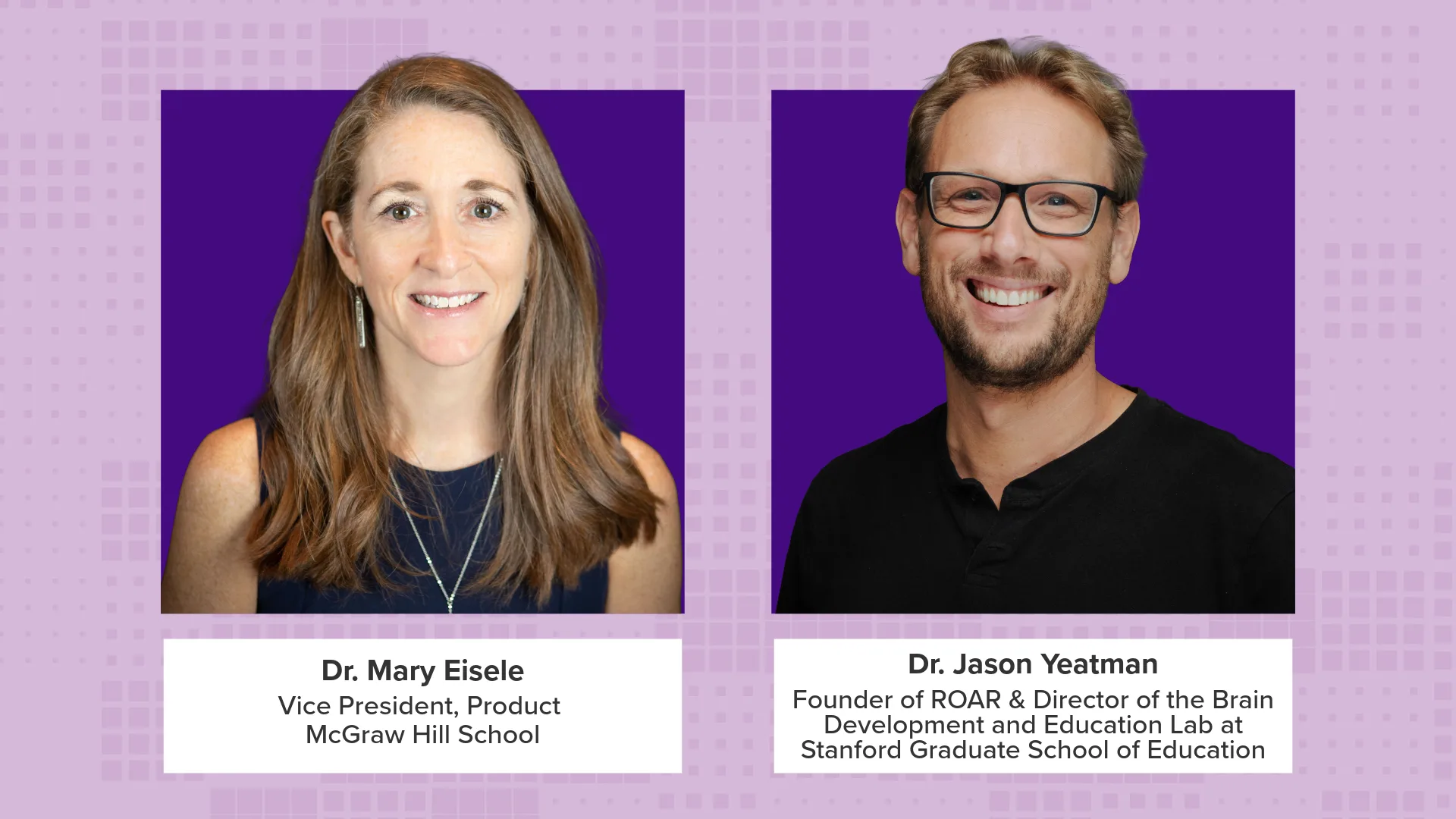
Dr. Mary Eisele, Vice President, Product McGraw Hill School; Dr. Jason Yeatman Founder of ROAR & Director of the Brain Development and Education Lab at Stanford Graduate School of Education

When students struggle with reading, identifying their challenges is only the first step. Educators need to understand where support is needed and what they can do next, without losing valuable instructional time. ROAR (Rapid Online Assessment of Reading) is a research-backed online literacy screener designed to assess foundational reading skills across the full K–12 continuum.

Developed at the Stanford Graduate School of Education, ROAR provides timely insights into the building blocks of reading, including single-word reading, letter-sound knowledge, phonological awareness, vocabulary, and sentence-reading efficiency. In this Q&A, Dr. Jason Yeatman, founder of ROAR and director of the Brain Development and Education Lab at Stanford Graduate School of Education, Reading and Dyslexia Research Program, and Dr. Mary Eisele, vice president of product for McGraw Hill’s School group, explore why ROAR was created and how bringing assessment, curriculum, and intervention closer together can help educators make more informed decisions for learners across grades K–12.

Traditional literacy screening has existed for decades. What challenge did you see that convinced you a new approach was needed?

Dr. Jason Yeatman: Traditional screening is typically very resource-demanding for schools. Assessments are often administered individually, which means each child must be pulled out of class while a teacher administers and scores the test and, in many cases, enters the results into a database. For a kindergarten, first-grade or second-grade class, that process can take a couple of days, and in states where screening happens three times a year, that adds up to a lot of lost instructional time.

Schools must also devote professional learning time to training teachers to administer and score the assessments accurately. That entire bundle of time could instead be focused on teaching and learning. One of the big motivations for ROAR was to lower those resource demands and make data collection rapid, so educators can spend more time planning how to address each child’s strengths and weaknesses.

How does ROAR work, what research informed its development, and what does it allow schools to do that wasn’t possible before?

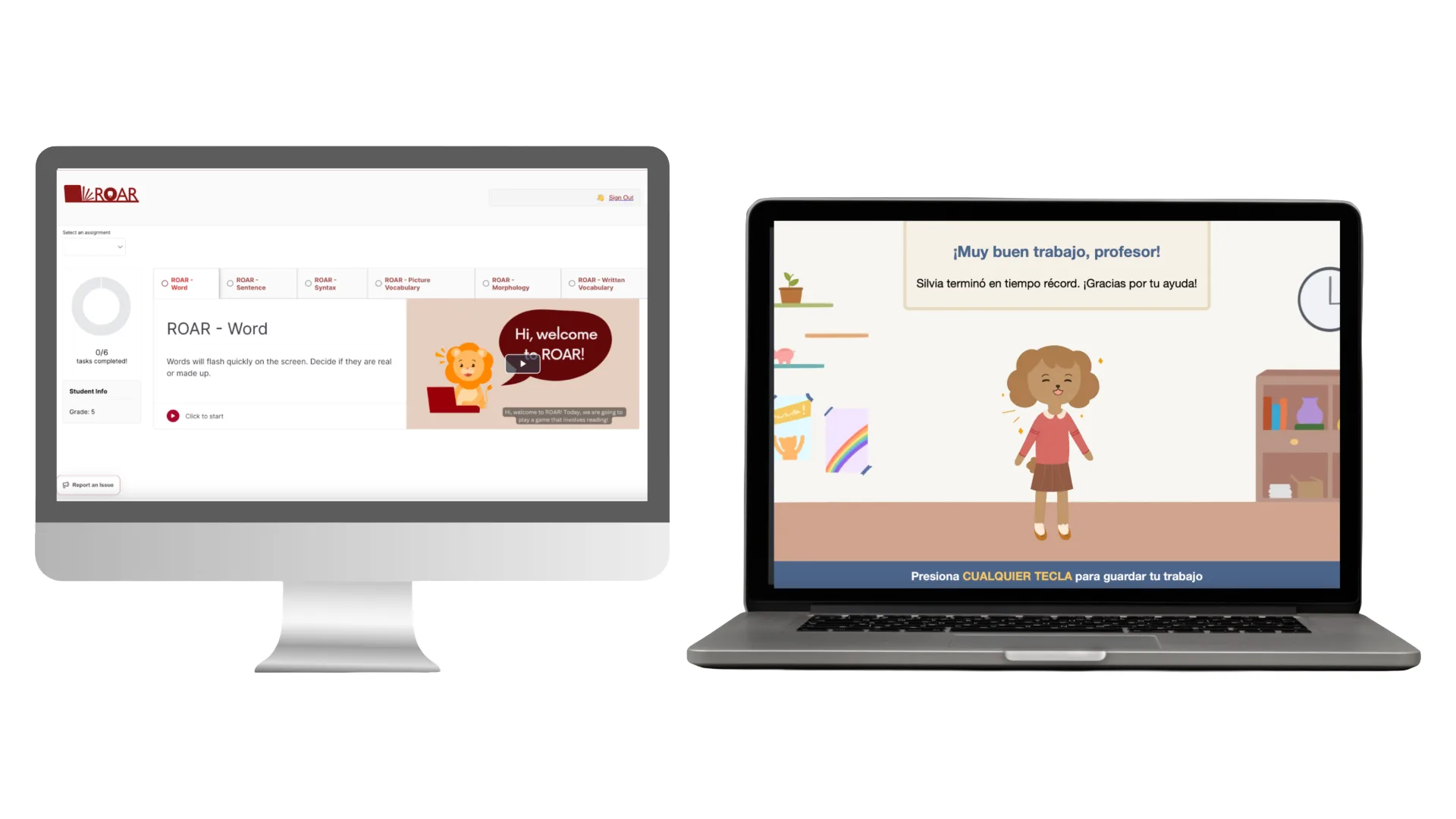
Dr. Jason Yeatman: ROAR is a series of lightly gamified, completely automated assessments delivered through an online platform. It measures skills ranging from single-word reading and letter-sound knowledge to phonological awareness, vocabulary and sentence-reading efficiency, essentially taking reading apart into its building blocks. Every measure we developed was grounded in vast cognitive science literature on the different mechanisms of reading. The assessments are completed silently, using responses within the different applications rather than requiring a child to read aloud while someone records a score. Students can log in and take the assessment at the same time, with interactive characters guiding them through the process and score reports reaching teachers in real time. This makes assessment a quick probe, allowing teachers to spend more time working with students, listening to them read, practicing with them and giving them feedback.

As awareness of dyslexia and other reading challenges continues to grow, why is it important for schools to think about literacy support beyond early grades?

Dr. Jason Yeatman: Early screening and early intervention are the gold standard, and we know they can make a meaningful difference for students. But reading challenges don't necessarily disappear after the early elementary years. Dyslexia doesn't simply go away in third grade unless appropriate interventions and supports have been provided, and targeted instruction can still be highly effective throughout school. That's why it's important to think about literacy support as part of a broader, multi-tiered system that gives educators the information they need to support students at any age. ROAR's K–12 reach is important because the demands of reading, writing and vocabulary continue to grow as students move through school. An integrated assessment system can help schools understand and address reading needs over time rather than treating screening as something that only happens in the earliest grades.

Dr. Mary Eisele: Early identification is critical, but it can't be the end of the literacy conversation. As students move through school, their needs evolve and the literacy demands placed on them become more complex. That's why it's so important for schools to think about literacy support as a continuum, with assessment, instruction and intervention that can respond to students' needs throughout K–12.

There’s a gap between what research tells us about reading difficulties and what most schools are actually able to act on. How does ROAR help close it, and why is McGraw Hill the right partner to bring it to scale?

Dr. Mary Eisele: The goal isn’t more assessment. It’s better information that helps educators make the right instructional decisions for their students. They need timely insights that help them understand where students need support, what level of support may be needed, and what to do next. ROAR helps bridge that gap by bringing research-backed insights about students’ reading needs into an assessment designed to support instructional decisions. Because McGraw Hill supports educators across core literacy instruction, intervention and supplemental learning, we have an opportunity to connect ROAR insights with what happens next for a student. ROAR will complement McGraw Hill's K–12 literacy programs, including its core ELA curriculum—Emerge!, Summit!, Soar!, and ¡Emerger juntos!—as well as its intervention and supplemental solutions—Reading Mastery, Corrective Reading, and Achieve3000 Literacy—creating a more seamless pathway for educators to identify student needs and connect each student with personalized support, learning tools, and curriculum that help build the skills they need. It’s really about helping translate what we know from research into what educators can do in the classroom.

Dr. Jason Yeatman: In McGraw Hill, we found a special partner. Beyond its reach, McGraw Hill brings exceptional product development teams that can continue building ROAR to meet the needs of schools and integrate it with curriculum. An assessment is only useful to students to the extent that it influences teaching, and the opportunity here is for ROAR data and instructional resources to live within the same ecosystem. I was also struck by McGraw Hill’s interest in the science of reading and its commitment to making sure innovations from science don’t sit in academia but reach the students and teachers who should benefit from them. Those were the big reasons McGraw Hill was the clear choice for us.

Looking ahead, what impact do you hope integrating ROAR will have on educators, students and families?

Dr. Mary Eisele: Ultimately, I hope this helps educators understand what each student needs and act on that information sooner. For educators, that means clearer insights that can support more confident decisions about instruction and intervention. For students, it means receiving help that is better aligned with their needs. For families, it can provide greater clarity about a student’s reading development and where additional support may be needed. What excites me most is the opportunity to bring assessment, instruction and intervention closer together, helping educators move from identifying a need to determining what to do next.

Dr. Jason Yeatman: I hope districts are empowered to develop systems that work for their schools and help educators make data-informed decisions tailored to individual students. That would also support clearer communication with families and give them better knowledge about their children’s reading development. Ultimately, it could help reframe how we think about building effective multi-tiered systems of support.

For more information on ROAR, visit https://www.mheducation.com/prek-12/resources/roar.html